A tree doesn’t grow because someone pulls on its branches. It grows because the conditions around it allow it to.
People aren’t so different.
The best ideas, the bravest conversations and the boldest work rarely emerge because someone demands them. They emerge when people feel safe enough to contribute, confident enough to take risks and certain that they won’t lose themselves in the process.
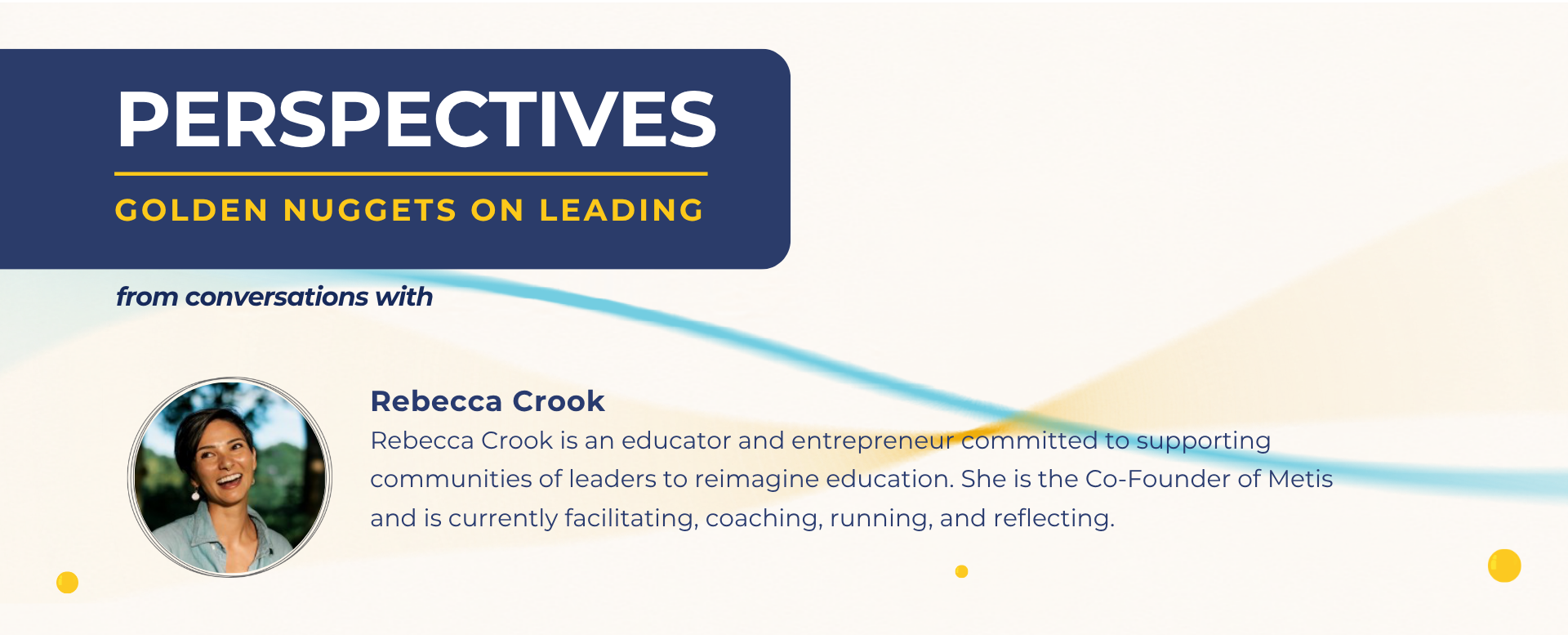
That is where this conversation with Rebecca Crook, leadership practitioner and community builder, begins. Speaking with Julia Middleton, Rebecca explores belonging not as a perk of a healthy culture, but as the foundation that makes courageous work possible. As Julia reflects, “Our bravest and our boldest work comes when we feel we belong.” The rest of the conversation explores why belonging is far more than simply feeling welcome—it is about creating the conditions in which people can become the fullest version of themselves.
Belonging Isn’t the Same as Fitting In
For Rebecca, belonging has never been an abstract idea. It has been a lifelong question. Growing up in a biracial, bicultural family in the United States before living and working in India, South Africa and now Kenya, she has spent much of her life navigating different cultures and communities.
“I think it’s like a fundamental curiosity of my life,” she tells Julia. “It hasn’t always come easily to me—not only just as a leader, but as a human.”
Those experiences taught her something that many workplaces still struggle to understand. Belonging is not the same as fitting in.
“I think belonging is not the same thing as fitting in,” she says. “Fitting in requires me to shape-shift… to become what I think other people want me to be.”
She pauses before adding what that feels like.
“That actually feels super isolating. Super alienating.”
It is a powerful distinction. Fitting in asks us to edit ourselves until we become acceptable to others. We spend energy reading the room, adapting our personality and suppressing parts of ourselves that feel different. Belonging asks something entirely different. It allows us to remain ourselves while becoming part of something larger. It isn’t about becoming more like everyone else; it is about creating a space where everyone can contribute without pretending to be someone they are not.
The Courage to Be Seen
As the conversation unfolds, Julia notices another word quietly sitting beneath Rebecca’s reflections: visibility.
She remembers a piece of music written by one of the first Women Emerging expedition members called Elle est visible—She is visible. “Almost the opposite of belonging is to be invisible, isn’t it?” Julia asks.
Rebecca smiles because she recognises the tension immediately.
“There are days where I would love to be invisible,” she admits.
Many of us know that feeling. Remaining unnoticed often feels safer than risking judgement. Yet Rebecca believes belonging requires exactly the opposite.
“When I’m courageous enough to just be myself,” she says, “and when I’m curious enough to know the dreams, hopes, desires, preferences, quirks of my teammates… curiosity is really important.”
That sentence captures the balance beautifully. Belonging is never only about being accepted. It also asks us to be curious about the people around us. It requires both vulnerability and generosity—the willingness to let ourselves be known and the willingness to genuinely know others.
Curiosity Creates Connection
Listening to Rebecca, it becomes clear that curiosity is not simply a personality trait. It is one of the ways belonging is built.
Too often, we assume we know the people we work with because we know what they do. We know their job title, their responsibilities and perhaps how they contribute in meetings. Rebecca invites us to look much deeper than that.
“But when I’m courageous enough to just be myself,” she says, “and when I’m curious, leaning in with curiosity to know the dreams, hopes, desires, preferences, quirks of my teammates… I think curiosity is also something that’s really important.”
It is a beautiful observation because it shifts curiosity away from tasks and towards people. Rather than asking What are you working on? Rebecca encourages us to ask, What matters to you? What are you hoping for? What brings you alive?
Those conversations change relationships. They replace assumptions with understanding and transactions with trust. When people feel known beyond the work they produce, they are far more likely to contribute honestly, challenge ideas respectfully and admit when they need help. Curiosity, in other words, is not separate from belonging. It is one of the ways belonging grows.
Julia picks up another thread in the conversation: visibility. Recalling Elle est visible, she reflects that “almost the opposite of belonging is to be invisible.” Rebecca agrees, while acknowledging that visibility isn’t always comfortable. “There are days where I would love to be invisible,” she says. Yet the paradox is that belonging asks us to risk being seen—and curiosity helps create the kind of relationships where that feels possible. The more genuinely interested we become in one another, the less people feel they need to hide.
Creating the Conditions for Courage
Julia is interested in what this looks like in practice. If belonging matters so much, how do we actually create it within a team?
Rebecca’s answer isn’t a grand programme or a cultural initiative. Instead, she talks about the small things that happen consistently. Shared rituals. Intentional systems. Moments that remind people they matter.
“I think having that common ground, a shared mission, vision, I think is huge,” she explains. But she is equally clear that purpose alone isn’t enough. Teams also need rituals that reinforce that shared identity. “Co-creating rituals or systems… can be really fun,” she says. “Shared lunches… weekly shout-outs… how you start a Monday team meeting.”
She describes one of her favourite rituals. At the beginning of each week, everyone shares a highlight and a lowlight from the previous week. On the surface, it sounds like a simple check-in. In reality, it creates repeated opportunities for “curiosity and courage and vulnerability and authenticity.” People learn about one another’s lives, celebrate successes together and understand when someone is carrying a difficult week.
Rebecca is also careful to point out that belonging isn’t static. “Belonging is a dynamic experience,” she says. “It’s not static, and neither should our rituals or systems that support that belonging.” As teams evolve, the ways we create connection have toevolve too.
Julia builds on this idea by observing that culture is often embedded in systems we barely notice. Recruitment processes, meetings, celebrations, decision-making and everyday habits quietly communicate what matters. If those systems reinforce belonging, people feel invited in. If they don’t, even the strongest values statement begins to ring hollow.
Belonging, then, is not built through a single initiative. It is built through hundreds of small moments that consistently tell people: You matter here.
The Work Worth Doing
Running quietly beneath this conversation with Rebecca Crook is a challenge to many of the assumptions we make about high-performing teams.
We often focus on strategy, capability and results. Rebecca reminds us that before any of those things flourish, people need something more fundamental. They need to know they can show up without leaving parts of themselves at the door.
Her distinction between fitting in and belonging becomes particularly important here. When people are constantly shape-shifting to gain acceptance, a significant amount of their energy is spent on self-protection rather than contribution. They become cautious about sharing ideas, reluctant to challenge assumptions and hesitant to take risks.
Belonging changes that.
It gives people the confidence to speak when they disagree, to offer ideas that feel unfinished, to admit mistakes and to ask for help. As Julia reflects towards the end of the conversation, belonging “makes us brave enough to be visible.” She also connects it to something equally important: trust. When people feel they belong, they trust the people around them enough to be honest, vulnerable and courageous.
That is why Rebecca never presents belonging as simply making people feel comfortable. Comfort is not the goal. Contribution is. Belonging creates the conditions where people can bring more of themselves to the work, and where teams can benefit from the full diversity of experiences, perspectives and ideas that might otherwise remain hidden.
Perhaps that is why Julia’s opening reflection feels even more powerful by the end of the conversation:
“Our bravest and our boldest work comes when we feel we belong.”
The invitation this conversation leaves us with is therefore a practical one. Instead of asking how we can encourage people to be more courageous, perhaps we should begin by asking a different question: Have we created an environment where people feel safe enough to be brave?
Because, much like a tree, people rarely flourish because someone pulls harder. They flourish when the environment around them gives them the confidence, trust and sense of belonging they need to grow.