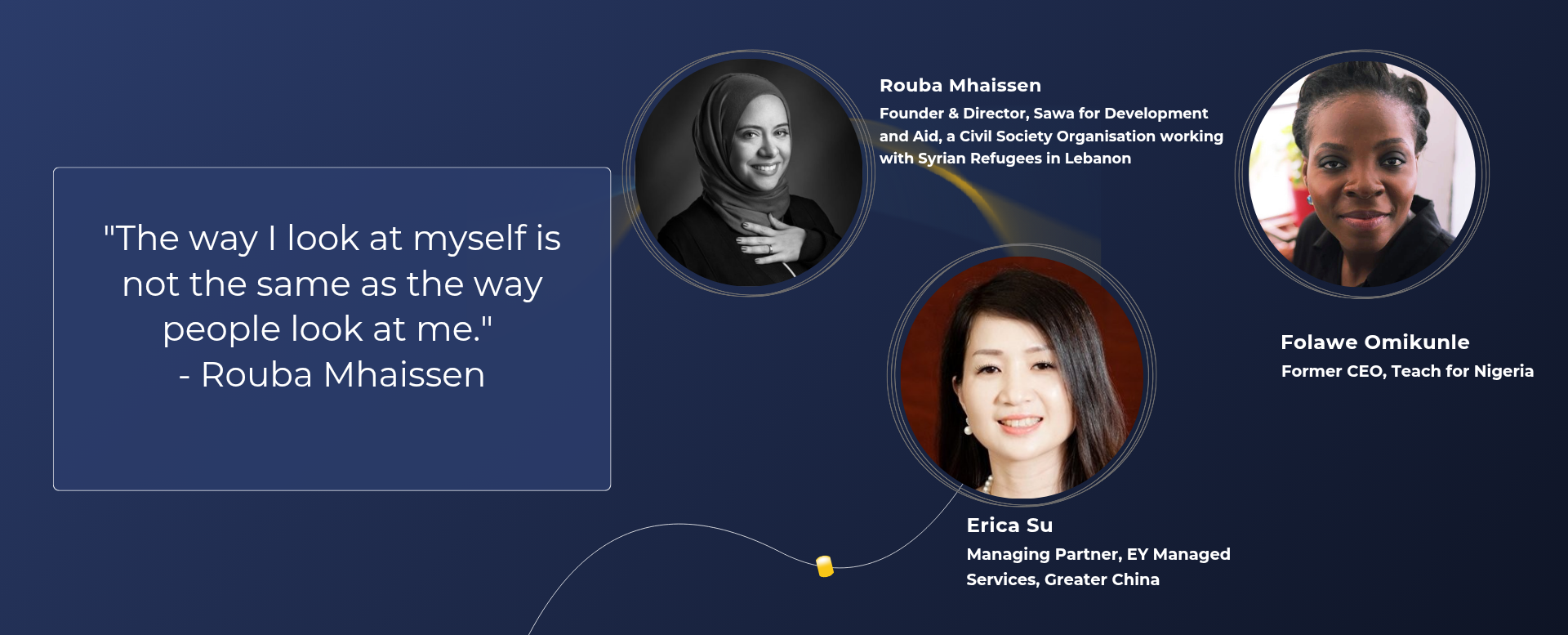
“The way I look at myself is not the same as the way people look at me.”
Rouba Mhaissen doesn’t say this at the beginning of her story. She says it after building an organisation, speaking before parliaments, advocating for refugees and carrying responsibilities that many would associate with leadership. Yet it is only when someone on her own team tells her they had expected more guidance from her that something shifts. She realises she has been leading all along.
As we bring our Journeys to Leadership series to a close, it felt right to return to this conversation.
Not because it offers one answer, but because it reminds us that there is no single way to arrive at leading.
Rouba Mhaissen, Erica Su and Folawe Omikunle come from different countries, different professions and different experiences. Yet listening to them together, a common thread emerges. None of them began with the intention of becoming a leader. Instead, each found themselves responding to what life placed in front of them. Only later did they recognise how those moments had shaped who they were becoming.
Perhaps that is why this conversation feels as relevant today as it did when we first released it.
When Other People See It Before You Do
Rouba’s story begins with love.
Growing up as the youngest child, she describes being surrounded by encouragement and belief. Looking back, she sees how much that early confidence mattered. It gave her something to draw upon years later when the Syrian refugee crisis unfolded and she felt compelled to act. What began as a small initiative grew into an organisation supporting refugees across the region. Yet despite everything she was building, Rouba never thought of herself as someone leading.
The turning point came unexpectedly.
During an exit conversation, a colleague shared something Rouba had never considered. She had expected more mentorship and guidance. It was a simple comment, but it challenged the way Rouba saw herself.
“The way I look at myself is not the same as the way people look at me.”
It is a remarkably honest observation and one that will resonate with many women. We often wait until we feel completely ready before accepting that we are leading. Meanwhile, others have already begun looking to us for direction, reassurance and confidence.
Sometimes the hardest step isn’t becoming a leader.
It’s recognising that we already are.
Writing Your Own Story
If Rouba’s story is about recognising yourself differently, Erica Su’s is about refusing to let other people write your story for you.
Throughout her career in global financial services, Erica has repeatedly faced opportunities that others believed she should accept. Promotions. New responsibilities. Bigger roles.
Yet rather than asking, Should I say yes?, Erica asks a different set of questions.
Can I do it?
Do I want the responsibility?
Am I okay with the sacrifices?
What will I miss?
These are not questions about ambition. They are questions about alignment.
One of the most powerful ideas in the conversation comes when Julia reflects on the difference between being self-limiting and self-defining.
From the outside, saying no to an opportunity can easily be misunderstood as a lack of ambition. Erica sees it differently. Sometimes saying no is the most courageous decision we can make because it keeps us faithful to our own priorities rather than somebody else’s expectations.
It is a reminder that not every opportunity is our opportunity.
And that writing our own story sometimes means disappointing other people.
Leading with Love Isn’t Always Comfortable
Folawe Omikunle’s story begins in a school community built on kindness.
She remembers teachers who looked beyond behaviour to understand what a child might be carrying. She remembers a headteacher who treated everyone with the same respect, from students to cleaners to security staff. It was there that Folawe first encountered the idea of leading with love.
But love, she explains, is often misunderstood.
It isn’t about avoiding difficult conversations.
In fact, one of the biggest turning points in her journey came when she realised that wanting everyone to like her was getting in the way of making the decisions that needed to be made.
A quote stayed with her:
If you want everyone to like you, sell ice cream.
Leadership asks something different.
It asks us to make decisions in service of the purpose, even when those decisions disappoint people we care about.
There is something refreshing about Folawe’s honesty. She doesn’t present kindness and accountability as opposites. Instead, she shows how deeply connected they are.
Sometimes the most caring thing we can do is have the conversation we have been avoiding.
Looking Back to Understand the Journey
Although these three women tell very different stories, they all return to the same idea.
The moments that shape us rarely announce themselves at the time.
A colleague’s unexpected feedback.
A decision to say no.
A difficult conversation.
A leap of faith.
Only in hindsight do we begin to understand why those moments mattered.
That is what makes this conversation so enduring. It isn’t really about extraordinary careers or remarkable achievements. It is about the quieter shifts that happen inside us. The moment we recognise ourselves differently. The moment we trust our own judgement. The moment we stop trying to become someone else’s version of success.
Perhaps every journey to leadership begins there.
Not with a title.
Not with recognition.
But with the decision to become more fully ourselves.
Listen to the special re-release of Aha Moments in the Journey to Leadership on the Women Emerging Podcast. Whether you’re returning to this conversation or discovering it for the first time, you may find yourself recognising parts of your own journey within these three remarkable stories.