
Advice can help us see a situation differently. An introduction can create an opportunity we could not have reached alone. Someone speaking up against an unfair assumption can change how our contribution is heard. Each offers support, but understanding the differences helps us recognise what we actually need.
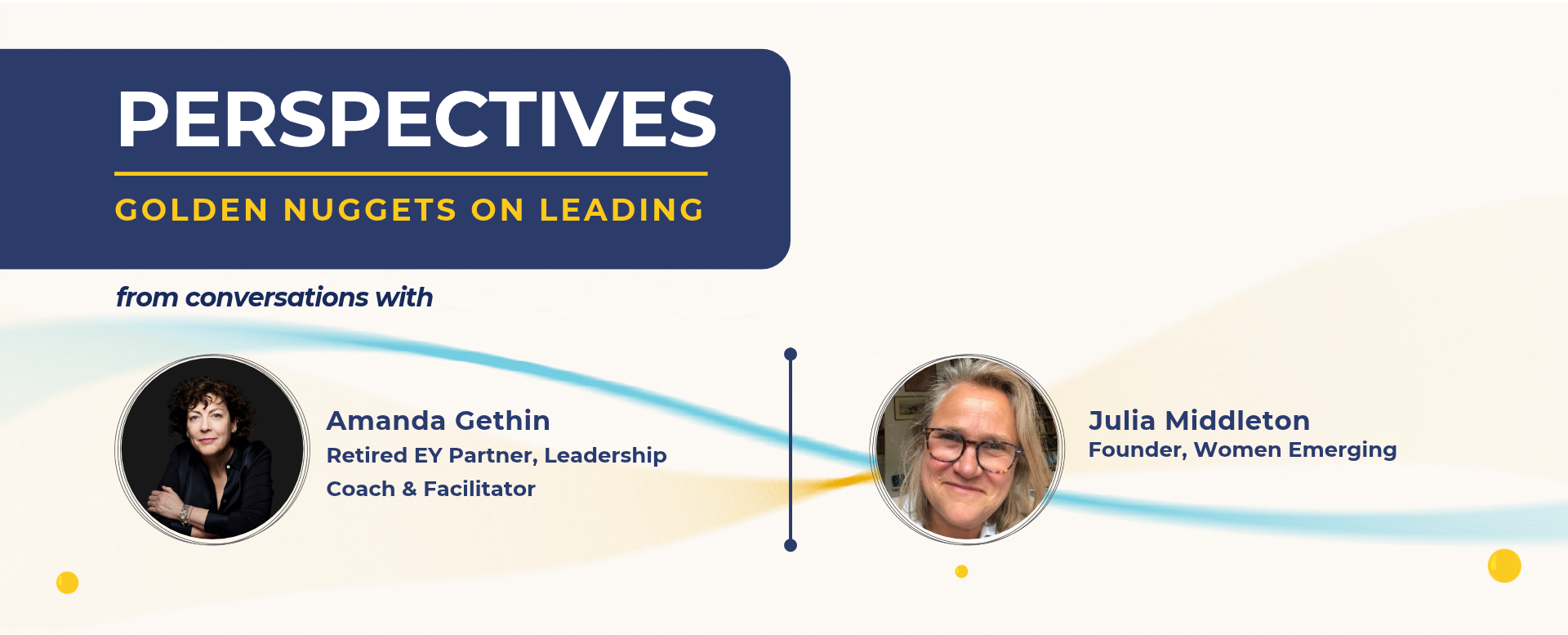
In a recent Women Emerging Live, now available on the WE Podcast, Amanda joined Julia to explore mentoring, sponsorship and allyship. Amanda shares her experience of these relationships, examining what makes them useful and how easily helping can slip into taking over.
Different forms of support meet different needs
Amanda describes mentoring as a relationship focused on development. A mentor shares experience, offers perspectives and helps someone think through decisions. They might come from within an organisation, another sector or a person’s wider community.
A sponsor uses their influence to open opportunities and advocate for someone’s advancement. As Amanda explains, “They’ll talk about you in rooms where you’re not present.” Doing so puts their own reputation behind the person they support.
An ally uses their position or privilege to challenge bias, amplify voices and support fairness. Their commitment often extends to a community whose lived experience differs from their own.
Julia pictures these relationships through the image of a door. Mentors help someone prepare to walk through it and navigate what follows. Sponsors help open it. Being clear about the distinction allows us to ask for the support we need and be honest about what we can offer.
Allyship needs to move from words to action
Julia is sceptical about people who describe themselves as allies but disappear when circumstances become difficult. Amanda recognises the concern. Claiming the title can be much easier than doing the work.
“It’s a role, not a title.”
For Amanda, meaningful allyship begins with understanding another community’s lived experience and taking what people say seriously. It then requires action when unfairness appears.
Julia remembers a colleague who appreciated her lack of prejudice but challenged her to turn that attitude into something practical. The exchange made her recognise that talking about fairness had not been enough.
An ally’s contribution becomes visible in what they do: the assumption they challenge, the issue they raise or the support they continue to offer when it becomes uncomfortable.
Advice becomes less useful when it turns into instruction
Mentoring also requires more than good intentions. Amanda emphasises consistency and giving someone proper attention, while remaining alert to becoming overly invested in their success.
That shift can happen quietly. A mentor offers advice, begins to feel attached to a particular outcome and becomes frustrated when the other person chooses differently. The relationship starts to follow the mentor’s expectations.
Amanda suggests noticing whether there is still room for an exchange. Can the person receiving support ask questions, disagree and explain what they want? Or does each conversation feel like being taught a lesson?
Different perspectives can help restore that space. Julia is particularly interested in intergenerational co-mentoring, where people at different stages of life learn from one another. Experience can travel in both directions.
Good support leaves room for the other person’s choices
Julia recalls accompanying her daughter to a university interview when she needed help travelling. When the interviewer behaved rudely, Julia intervened forcefully, believing she was defending her.
Afterwards, her daughter made clear that Julia had taken over a situation she wanted to handle herself. Julia had been so focused on responding that she had missed her daughter’s reaction.
Amanda connects the story to a question that applies across all three relationships: are we still following the other person’s agenda?
Support should help someone develop their judgement, access opportunities and act with greater confidence. That requires checking what they want, listening as their needs change and allowing them to make choices we might not make ourselves.
Listen to Julia and Amanda’s full conversation, now available on the WE Podcast, and consider what kind of support you need, or could offer, while leaving room for the other person to lead their own way.