As someone who spent her formative years in theatre, I always understood how every great theatre performance depends on an invisible weaving.
The audience may notice the lead actor, the set design, or the story, but what truly determines whether a theatre production soars or stumbles is often hidden from view. It lives in the action-reaction between two on-stage actors, the silent cues exchanged backstage, and the collective rhythm that emerges when individuals move as one. When those threads are strong, a production hums with life. When they fray, no amount of talent can disguise the disconnect.
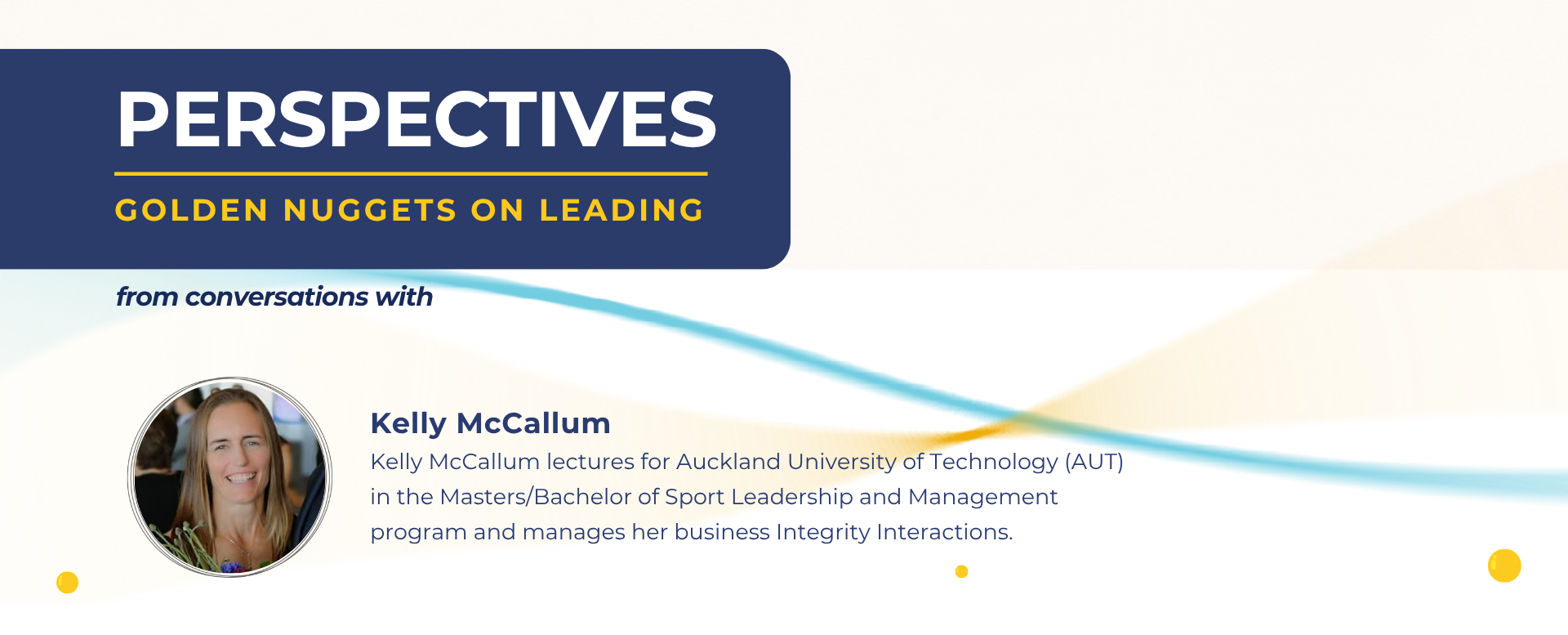
I found a similar dynamic at play while listening to former international rugby captain Kelly McCallum on episodes 19 & 88 of the Women Emerging Podcast. Her language wasn’t about commanding a team or maintaining control, something I have experienced during my corporate career. It was about weaving, bringing together individual brilliance, managing Energy, and cultivating the relationships that allow a collective to perform at its best.
Mastery in the Shadows: The 10,000-Hour Relational Apprenticeship
The concept of the “10,000-hour rule“ is a widely recognised benchmark in performance psychology, popularised as the threshold required to achieve elite mastery in any complex skill. Originally studied by psychologist Anders Ericsson, the rule suggests that becoming an expert—whether in chess, music, or sport—is not merely a product of innate talent but the result of approximately 10,000 hours of “deliberate practice“.
While often applied to technical domains, Kelly applies this lens to the invisible art of relationship awareness. She offers a provocative reframing of women’s social conditioning, suggesting that leadership excellence is not something women “start” in the boardroom, but something they have been refining since childhood.
Kelly argues that because girls are often socially constructed toward relationship building and communal maintenance, they begin their “practice” almost immediately.
“As women, we’ve reached those 10,000 hours of relationship skills by the time we were probably eight years old,” McCallum observes. “This means that women and all of us have that edge because for whatever reasons, women have had lots of practice of relationships… We have done our 10,000 hours”.
Julia Middleton, founder of Women Emerging and the podcast host, reinforces this, noting that by the time a girl is eight, she has already completed the equivalent of a professional apprenticeship in understanding interpersonal “threads” and social dynamics. This early-start expertise allows women to enter leadership roles with a “foundational strength“ in empathy and connection—skills that are often undervalued but statistically vital.
The 58% Success Factor: Data Behind the “Soft” Skills
The journalistic data suggests that this “foundational strength” is the primary engine of modern leadership. While cognitive intelligence (IQ) provides the “threshold requirement” to get an individual into the room, Emotional Intelligence (EQ) is what determines if they can lead the ensemble once they are there.
- The Predictive Power of EQ: Research consistently shows that EQ explains 58% of success across all job categories.
- The Leadership Differentiator: Among top performers, 90% possess high emotional intelligence scores.
- The Performance Shift: As a professional moves from an entry-level “human doing” to an executive “human being,” the importance of EQ skyrockets. At the executive level, 90% of leadership performance is attributed to EQ, while technical IQ accounts for only 10%.
These data points suggest that women possess a technical mastery in the very skills modern organisations need most: empathy, trust-building, and collective “weaving”.
As Kelly concludes, it is time for women to recognise this foundation as a legitimate expertise: “I don’t think we often put our hand up… and say, ‘Actually, I have 10,000 hours of skill of relationship practices. Move over, I know this stuff'”.
How to Tender the Invisible Threads
This early mastery allows women to develop an instinctive ability to use non-verbal cues, such as a specific glance at a co-worker or in Kelly’s world – “flick of a ponytail.”
In a rehearsal spaces, I have often witnessed an unsaid tension between performers. Kelly describes this as the “threads” of a team. To maintain synergy when the “scenery” of a match starts to collapse, she relies on an invisible language.
“One of my teammates used to say, ‘Kelly, I knew that if you just flipped your ponytail one way at me, I knew that I was okay, that we were still connected,'” she shares.
This ability to “bring the uncertainty down” through micro-connections is a vital skill. It creates what researchers call “Psychological Safety,” a climate where innovation thrives because the fear of judgment is removed. Conversely, Kelly is adamant that the fastest way to sever these threads is through humiliation: “I believe humiliation is a fast track to losing trust… that person’s made that mistake… that will break one connection very, very quickly”.
The Negotiation of the “X-Factor”
Kelly describes a constant “weaving” of the “X-Factor” player: the high-performer who can “run around three people” and change the game’s energy, into the collective.
However, there is a dark side: the “energy zappers”. These are toxic high-performers whose behaviours “infiltrate the collective and start to break it apart”. Research shows that interpersonal deficits are the leading cause of executive derailment. For Kelly, managing this is a matter of “constant negotiation”: “It was reasoning on whether it was worth not getting rid of the individual… or to the benefit of the team?”. She advocates for “clear and transparent communication” over avoidance, which she calls “manipulative control”.
Kelly also describes a specific “dance”: “You want to lead by example… but you also need to step back and make sure those relationships are okay”.
She advocates for stepping into a “space” that allows for objective observation: “I never was part of the collective, and I was never part of the individual… if I stepped back, I could see the collective, I could see the individual, I could see the relationships between them”. This mirrors Goleman’s concept of “Outer Focus,” where a person senses the forces at work in the entire field to respond nimbly to change.
Achieving the “Hum”
The ultimate goal of this weaving is a state Kelly calls “the hum”—a dreamlike, optimal state of absolute flow.
“The team culture is flawless. It’s moving together… you know each other’s movements. You can turn one way and someone will pass you the ball with your eyes closed”.
Recent research on “Brain Talents” correlates this state with learnable EQ skills like commitment, resilience, and proactivity, which make women 8.6 times more likely to thrive at work. Thus, as Kelly’s insights suggest, the work is about generating and maintaining Energy. It is the art of creating a “bubble” where every individual can fly, ensuring that the collective ensemble is always greater than the sum of its parts.
IN CONVERSATION:
Julia Middleton: So, Kelly, tell me about – if you’ve got a blank sheet of paper and you’re putting together a team, how do you put together a team that is going to be strong in its individuality and collectivism?
Kelly McCallum: When choosing a team, in Rugby’s 15, and usually about 23, your first instance in selecting is you want to select the players that make the team hum. So, it’s really a collective, you’re really going on the collective response. So, the players that are living and they’re breathing, the collective, and you know that when they’re on the field, the team will hum.
Julia Middleton: What does hum mean?
Kelly McCallum: So, hum means, like in team culture, which we talk about, the team culture is flawless. It’s moving together. Often in sport, they say it’s a dreamlike state where you’re just together, you know each other’s movements. You know, you can turn one way and someone will pass you the ball with your eyes closed. Like, it just hums, you know everybody inside and out. Now, within this humming, this is where the important individual X Factor players need to fit in. You need those because you need a couple of them because they’re the results. So they give the balance to the individuality and the collectivism. You don’t want to be completely collective because you want that, you need that diversity thinking, or you become predictable.
So first and foremost, the majority of them will be the ones that are collective in nature, and you know that they will perform as a team. And then you pick the one or two that you know will spark the team. Because often as a collective, when you’re coaching and they’re playing, they hum and they’re good, and it’s kind of this monotoned, just play—
Julia Middleton: It’s an Energy, but it’s a sort of, it’s a level Energy.
Kelly McCallum: Yeah, exactly, exactly. Yeah, and you can feel it, and everything’s working nicely. It’s a nice feeling, and you need something to inject. You need something just to raise it to the next bar. And that’s where those individual players do it.
They’ll get the ball, and they’ll run around three people, and they’ll fend one player, and then all of a sudden the Energy of the crowd gets up, the Energy of the team gets up, and it changes that level Energy, like you said, from the collective to a next level up.
So it’s really trying to get that balance on getting a good collective majority, but also those players that when you need them in the right time, they’re perfect for getting that energy up to the next level.
Julia Middleton: What are the ones that you would avoid having in?
Kelly McCallum: I avoid choosing players that I know will give up, will give up, have that kind of fixed mindset. I really try and avoid choosing ones that I know if they don’t do the right thing, they’ll give up, they’ll sulk, they’ll go as far away from the collective as possible.
And it’s just, yeah, it’s just really disturbing and it becomes toxic.
So those ones are fed out, usually as a coach, those ones quite early on are not part of the team towards the end. Give them a go, give them a go and see, because a lot of times those type of athletes have been natural athletes their whole life, and everything’s come easy to them, and now there’s a certain level where everyone’s kind of caught up to their bar, and they’re not used to it. They haven’t trained their brain, and that keep going, keep going, that growth mindset. So you give them a go, and you see if you can create that, but sometimes it’s just so fixed in their mind that it’s actually a detriment to the team.
Julia Middleton: And actually, they might fizz in another situation. They’re just not going to fizz here.
Kelly McCallum: Exactly. It usually is life. There’s different life experiences that happens over and over.
Julia Middleton: And what about what are the people that you avoid who are too collective?
Kelly McCallum: I think about when I think of players that are too collective, they go with the flow. But I don’t ever think that they want to push the bar any higher, if that makes sense. It’s a complacency that they stick with the collective, but you can see that they will not try and pull that bar higher.
So what happens is that when that unique person raises that bar and the rest of the collective lifts, they get left behind.
So you need those people in the collective so that there’s that balance again, that when the bar gets raised, the collective raise. So you need that high level collective within your collective to keep in there because they’ll just get left behind. They won’t raise with the collective.
Julia Middleton: And they too will get miserable.
Kelly McCallum: Yes.
Julia Middleton: It’s not good for them.
Kelly McCallum: No, no, no, not at all. Not at all, because they’re used to being part of the collective and now they’re not part of it, and they don’t know how to raise, to be the rest of the collective. Yeah, they don’t feel like they belong anymore.
About the Author
Kavya Misra is a writer and producer with a background in theatre, films and digital content. Her master’s in English literature forms the foundation for all her creative and corporate projects. In addition to this, Kavya has an extensive background in theatre. She has written and produced plays. She has also performed at festivals like Bharat Rang Mahotsav by National School of Drama, India and International Theatre Festival of Kerala, India.