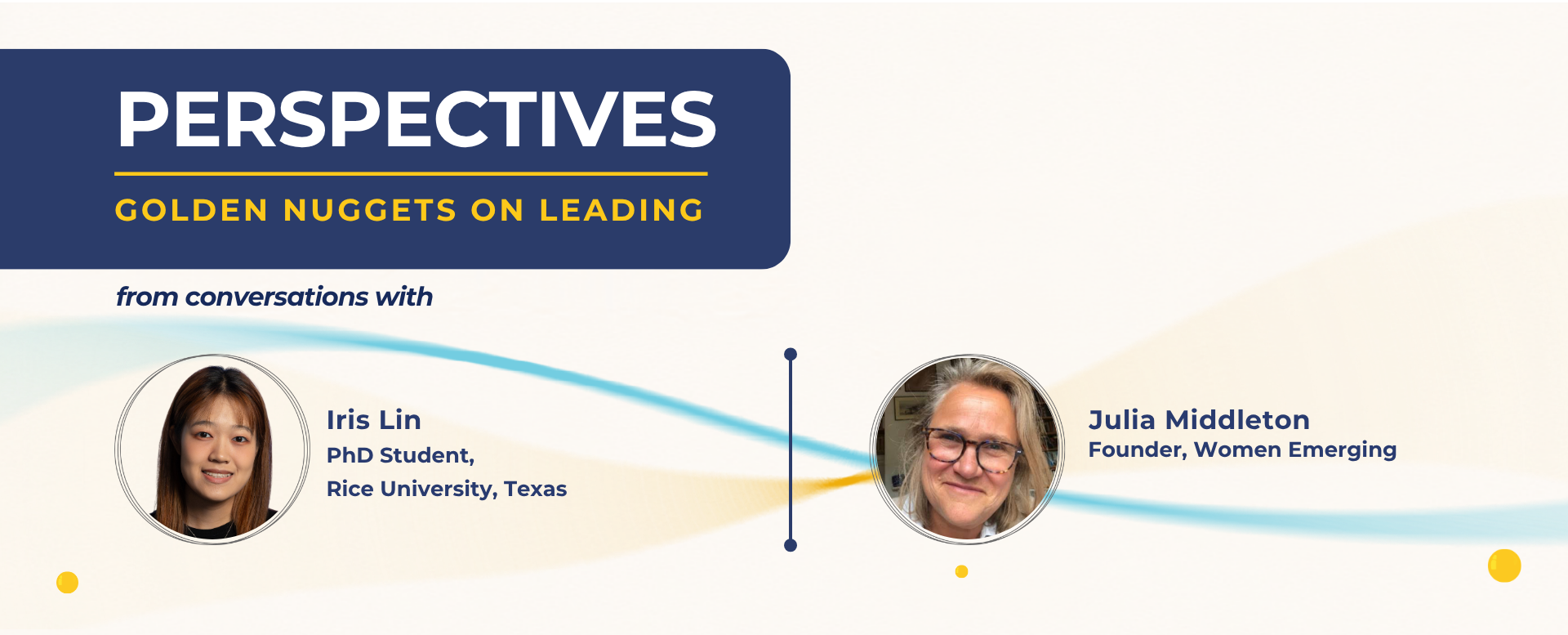
From a young age, Iris Lin learned what it meant to be a good student. You prepare carefully, study the right material and work towards the correct answer. If you solve the problem accurately, you receive the marks. If you do not, you lose them.
But when Iris began leading, she carried this student mindset with her. She felt she needed to know everything, plan every step and offer her team a complete blueprint. It was only during her Women Emerging Expedition that she began to question whether the habits that helped her succeed as a student were getting in the way of how she led.
At 15, Iris and her friends challenged the outdated rules of a school club they cared about. At the time, she did not recognise their actions as leading. It was only later, when younger members told them that the changes had made a difference, that she looked back and realised, “That was leadership.”
During the Expedition, Iris explored what had given her the courage to act. She found education, motherness and trauma in her Essence. Education gave her hope that she could keep learning and that the world could change. Motherness came from her love for the people around her and her desire to make their lives better. Trauma made her alert to what could go wrong and determined to protect others from experiencing similar harm.
Iris does not describe herself as naturally brave. She gets frightened easily and often anticipates the worst. Yet she discovered that when there is something she wants to pursue, or someone she wants to protect, courage arrives.
“If I have something that I want to pursue, or if I have people I want to protect, I feel like these things motivate me and infuse me with courage.”
Her fear, she realised, is not necessarily the opposite of courage. It helps her notice risks and consider what could harm a team. The challenge is to hold fear and action together: to remain careful without becoming unable to move.
The Expedition also changed Iris’s understanding of her role in a team. She had once imagined the person leading as a mountain guide standing ahead of everyone else, holding the only map and knowing the route to the top. Her experiences with her teams showed her something different. Other people had knowledge and abilities she did not have. They did not need her to figure everything out alone.
Leading became less about possessing the entire map and more about helping the group discover its next step. Iris could continue gathering information, organising what the team already knew and helping everyone move forward, without prescribing every stage of the journey.
This also meant questioning her pursuit of perfection. As a student, Iris had been evaluated through homework, examinations and scores. She brought the same standard into her relationships, sometimes rereading messages repeatedly and worrying about a single word she could have chosen differently. But leading is an ongoing relationship