“Vulnerability does not require full exposure.”
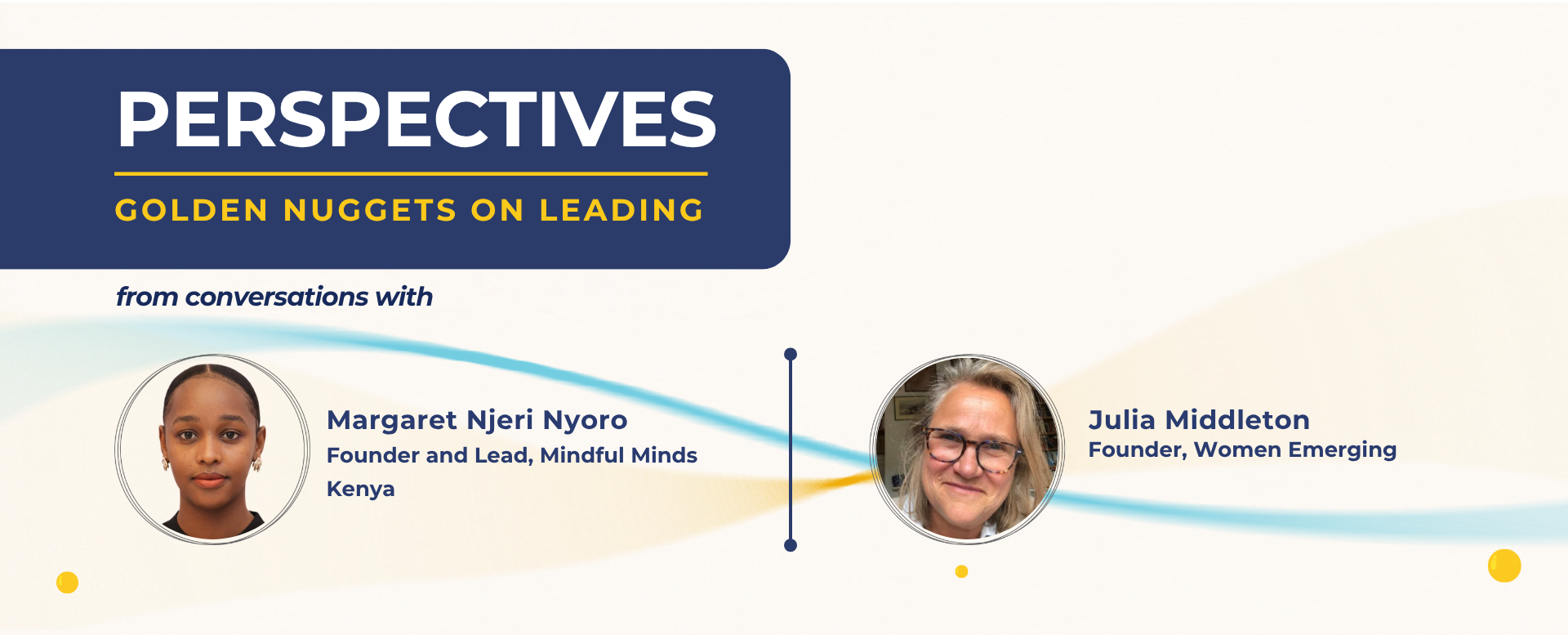
How much of yourself do you need to reveal when you are leading? Let’s hear what Njeri, a Changemaker Expedition explorer, feels about it. This conversation between Julia Middleton and Margaret Njeri Nyoro sits alongside an earlier one with Janice Argeswara about empathy, because both arrive at a similar conclusion: empathy needs boundaries, and so does vulnerability.
Njeri believes vulnerability is essential to leading because it allows people to see the human being behind the role. We may have been taught that people who lead should appear certain, strong and as though they have all the answers. But perfection is difficult to connect with. Vulnerability makes something else possible: recognition. When we speak honestly about something we have experienced, someone else may hear their own experience in ours. As Njeri puts it, vulnerability can make people “feel seen and heard”. From that recognition, community can begin to form.
For Njeri, this is particularly important because of the culture she grew up in. She talks about how, in her experience in Africa, people can be taught to suppress emotion and avoid revealing what is happening in their own lives. It can feel easier to speak about somebody else’s experience than to say, “I have gone through this.” Yet she believes our own stories can make our leading more powerful because people can see where our passion comes from. Being someone who leads does not mean having no emotions, nor does it mean having all the answers.
But there is a tension here. Once you allow yourself to be vulnerable, how do you know when to stop? Njeri learnt the answer through experience. Early in her leadership, she spoke publicly about her own lived experience and the emotional fatigue that had accumulated over years. For a long time, she had continued leading, listening to other people and appearing strong while suppressing what was happening inside her. Then she shared. Afterwards came the feeling that many people who have revealed something deeply personal will recognise: What have I done?
Julia describes this as a “vulnerability hangover”. Njeri remembers feeling exposed and wondering whether she had betrayed herself in some way. The problem was not that she had told her story. It was that she had not yet worked out which parts of the story she wanted to tell. She realised that there were things she was still healing from, and that being able to speak about an experience did not necessarily mean she had finished processing it.
This is where the distinction between vulnerability and exposure becomes important. When we reveal something before we are ready, the story no longer belongs only to us. Other people can interpret it, repeat it and even twist it into something we did not intend. So vulnerability, Njeri argues, needs preparation. Before sharing, we need to understand what we are comfortable revealing, what we are not yet ready to reveal, and why we are telling the story in the first place.
Julia turns this into a series of useful questions: What am I going to reveal? What am I not confident about revealing? Why am I revealing it? And am I reaching a point where I am revealing simply for the sake of revealing? There is a danger that vulnerability can become about the response it generates rather than the change it is meant to support. A good interviewer, Julia points out, can also draw more and more from someone until they have revealed far more than they originally intended. Knowing your own boundary matters.
Njeri adds another question: what room am I telling this story in? By “room”, she means the emotional intelligence and maturity of the people receiving it. Some spaces can hold vulnerable conversations and others cannot. This is something she values about the Women Emerging Expedition. Women do not arrive only through their titles or achievements. They can talk about how they lead as human beings, including the challenges they face and the balance they try to find between empathy and distance, vulnerability and strength.