
When people ask why I chose a career in clean energy, I think back to a small but powerful moment in grade four. Our teacher had asked us to list ways to save energy. I wrote the basics: turn off the lights, conserve electricity. But one classmate suggested reusing the water from washing vegetables. That simple act struck me. It showed me that caring for the environment doesn’t always mean sweeping policies or new technologies. Sometimes it’s about wisdom in the everyday, small, creative choices that ripple into bigger change.
That realization became part of my identity. I studied Renewable Energy Engineering and later earned a Master’s in Global Sustainability Engineering at Heriot-Watt. But as I entered the professional world, I discovered the systemic challenges of sustainability. Not everyone has the privilege to buy eco-friendly products or sort their waste. For many, especially migrant workers or lower-income communities, the focus is on survival. This taught me something vital: sustainability is not only about climate or innovation, it’s about empathy, inclusivity, and creating safe spaces where everyone’s reality is considered.
Over the years, I’ve also learned that change is rarely linear. Even with strong data and ready technology, projects can stall if policymaking doesn’t align or profit overshadows purpose. These moments tested my resilience. They also reminded me that real impact comes through patience, decision making rooted in authenticity, and celebrating small wins. Every conversation, every pledge, every new mindset, it all builds momentum.
My turning point came in 2020, when I joined the Green Youth Majlis, an environmental youth initiative established by the Environment Agency – Abu Dhabi (EAD). There, I found not just a platform, but a creative community. One of the talks I hosted was with a group of younger kids, and what struck me was their pure curiosity. There were no certificates or rewards, just a genuine eagerness to learn more about environmentally mindful choices. It reminded me that impact often starts with simple engagement and interest.
More recently, I hosted a youth talk where I wasn’t sure if people would want to participate, but they did, and I even received a message afterwards saying, “Thanks, thought-provoking short presentation.” When we discussed facts like how one cotton shirt uses 2,700 liters of water, I saw how understanding and empathy can grow together. It wasn’t just numbers; it was a moment of awareness, a spark of care, and a reminder that understanding the consequences of our actions is often the first step toward meaningful change. These experiences reinforced that interest, caring enough to create learning spaces, to share knowledge thoughtfully, can spark curiosity and inspire action in ways I never thought about. I learned how leadership isn’t about being the loudest voice, it’s about creating safe spaces where new ideas can flourish.
Living in the UAE, the reality of climate change hits you in ways you can’t ignore. Every summer, temperatures soar past 50°C, and you see it everywhere, laborers cleaning skyscrapers, people walking or commuting under the blazing sun, objects left outside literally melting. Witnessing this year after year makes the urgency of living lightly on the Earth deeply personal. At the same time, I’ve seen small acts of care in everyday life, neighbors choosing reusable bags instead of single-use plastic and communities adapting thoughtfully to extreme conditions. These moments are reminders that meaningful impact begins with empathy, consideration for others, and small, consistent actions that together can spark real change. Living here has shaped my understanding that sustainable development is both urgent and achievable, as long as we act with care for people and the environment alike.
One project that remains close to my heart was a sustainability design competition, where my team built a digital platform to compare products based on environmental impact, like a green version of a price comparison app. We won runner-up, but more importantly, it felt like a step toward creative advocacy: making greener choices more accessible, one choice at a time. I later carried this spirit into an Expo City project, where we explored how behavioral design can drive environmental change, developing a rewards-based app to incentivize sustainable habits and designing recycling bins with distinct shapes and lids to improve waste separation. Together, these projects reminded me that environmental consciousness is not just about policies or technology, but also about human behavior and the small nudges that make better choices easier.
Looking ahead, my vision is a world where sustainability is not a burden or a luxury, but a natural part of how we live. A world where identity, authenticity, and purpose guide the systems we build. Where resilience is shared, communities are empowered, and circular economies replace linear ones.
What gives me hope is people. Students I mentor who ask sharp questions. Farmers who try composting methods rooted in cultural wisdom, Engineers who design more efficient systems. Even neighbors who stop me to ask about rooftop solar. These small interactions remind me that leadership doesn’t always have to be formal or institutional. Sometimes, it’s about listening deeply and nurturing a community where each voice matters.
And if there’s one thing I’ve learned, it’s that you don’t need to have all the answers. You just need to begin with the questions that matter. Because even one small idea, scribbled in grade four, can grow into a lifetime of impact.
About the Author
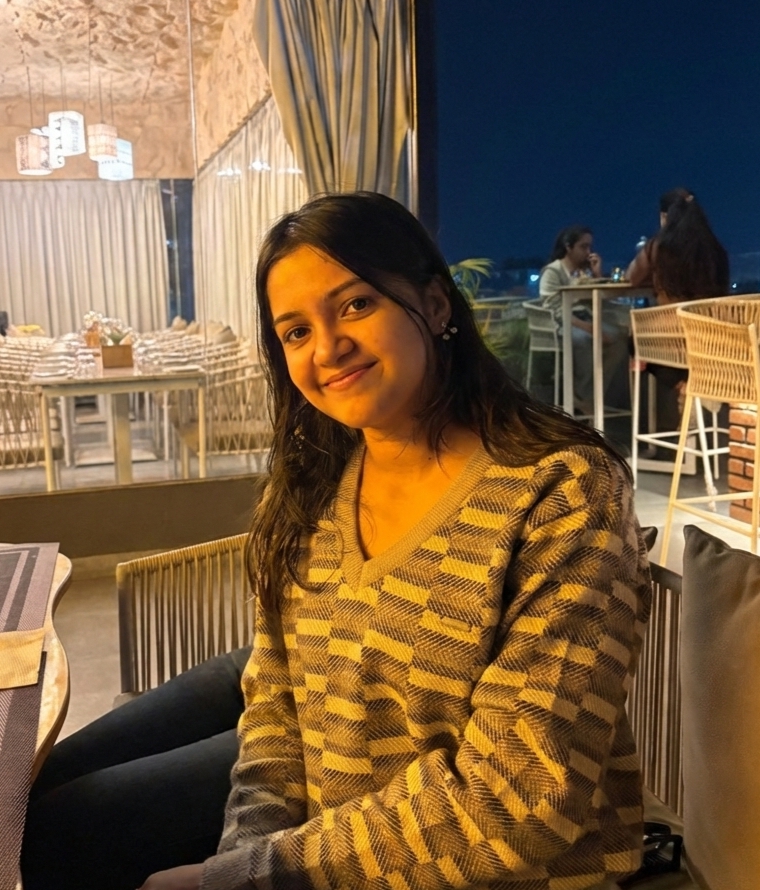
Megna Rajagopal loves exploring the world of clean energy and pushing for a more inclusive future. As a WE Expedition alumna, she’s passionate about championing gender equity in renewable energy, one idea at a time.