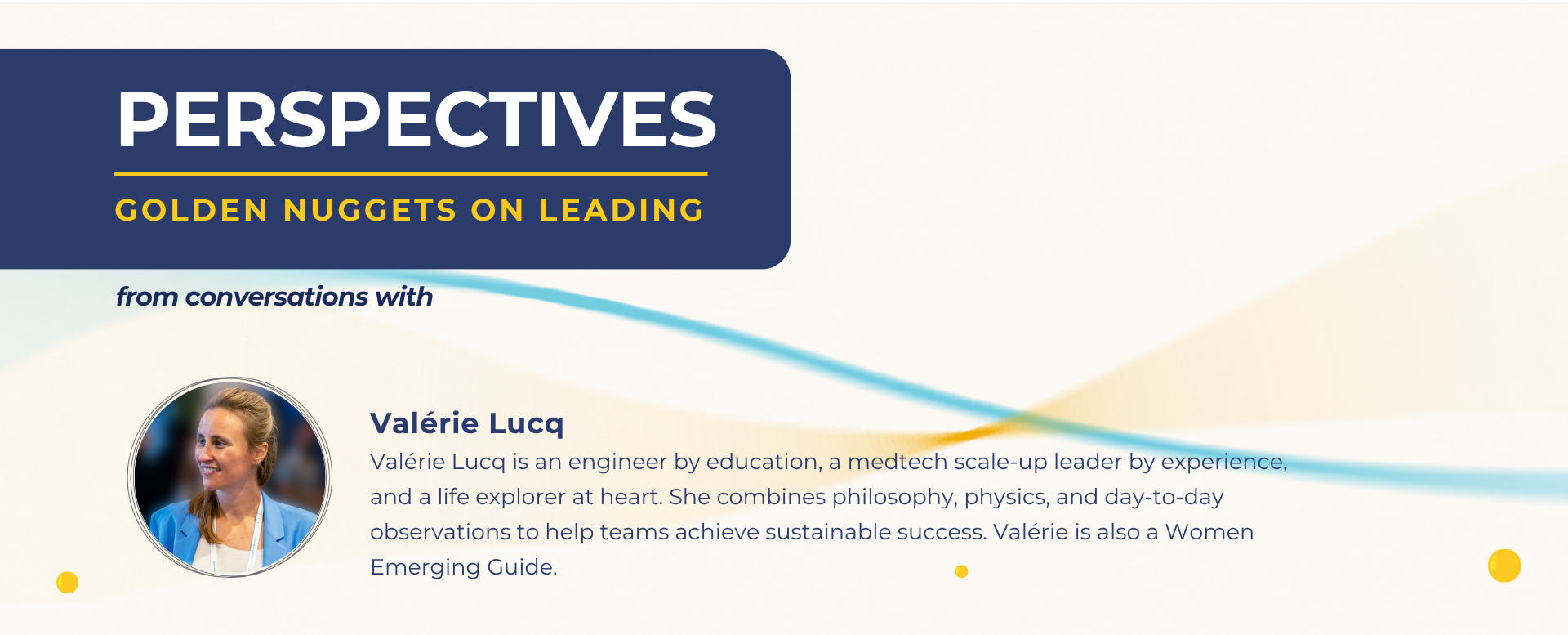
What does physics have to do with the way we work with people?
At first glance, very little. Yet one observation from engineer Valérie Lucq changes the direction of this conversation entirely. In physics, energy cannot be created; it can only be released. That simple idea prompts Julia Middleton to explore whether the same might be true of people. Rather than asking how we generate energy, they begin asking a different question: how do we unlock the energy that already exists?
What follows is a conversation about purpose, possibility and the often-overlooked role we play in helping others discover what is already within them.
Every Person Already Carries Extraordinary Energy
Valérie doesn’t begin with management theory or organisational psychology. She begins with physics. Reflecting on Einstein’s famous equation, she tells Julia that everything with mass contains energy—including every human being. She even shares an astonishing statistic: each of us contains more than 10¹⁸ joules of energy. “That’s more than the power of a hydrogen bomb,” she says. “So that’s pretty fascinating to me.”
For Valérie, this isn’t simply an interesting scientific fact. It fundamentally changed how she approached working with people. “If all of these people are energy,” she explains, “my main role is to find out how I’m going to release as much energy, in a sustainable way.”
Julia immediately recognises how significant that distinction is. “I, of course, talk endlessly about generating energy,” she laughs. “But I’m going to have to rethink this.” Valérie gently reframes the idea. Generating energy suggests creating something that isn’t there. Releasing energy begins with a different assumption altogether—that every person already possesses extraordinary potential. The question is simply how we create the conditions for it to emerge.
It is only a change of one word, but it transforms the way we think about working with people. Instead of asking, How do I motivate someone? we begin asking, What is preventing their energy from being released?
A Shared Story Releases Energy
If people already carry immense energy, what actually unlocks it?
For Valérie, the answer begins with purpose. Not a mission statement that hangs on an office wall, but a story that helps people understand why their contribution matters.
She illustrates the point with the familiar story of the three bricklayers. One says he is working simply to earn enough money to feed his family. Another says he is building a wall. The third smiles and says, “I’m building a cathedral.”
“The energy radiating from this person,” Valérie says, “comes from knowing what he is doing.”
The work itself is identical. The bricks are the same. Yet only one person is energised because only one can see the bigger picture.
That story stays with Julia because it captures something many organisations overlook. People rarely draw energy from tasks alone. They draw energy from believing those tasks contribute to something meaningful.
Valérie is equally realistic about why this matters. “Whatever we do in life,” she says with a smile, “shit will hit the fan at some point.” Projects become difficult. Markets change. Plans fail. “Knowing what you’re doing it for,” she continues, “is what keeps you going at the end of the day.”
Purpose, then, is not simply about inspiration. It is what gives people resilience when the excitement fades and the difficult work begins.
Energy Is Contagious—But So Is Conviction
A compelling vision, however, cannot exist only in a strategy document.
Valérie believes people only begin to believe in a story when they see someone else living it. It isn’t enough to explain the vision; you have to embody it. People notice whether your actions, decisions and conversations consistently reinforce the future you’re asking them to help build.
That authenticity is what creates trust. It allows people to connect their own work to a shared ambition rather than simply completing another task on a to-do list.
Energy, in other words, spreads through conviction long before it spreads through words.
Celebrating the Small Signs
One of the most practical moments in the conversation comes when Julia asks how Valérie kept that shared sense of purpose alive within her own company.
Her answer isn’t about financial targets or major product launches. Instead, she describes the small moments that reminded the team they were making a difference.
At Molecubes, the company regularly created educational webinars to make imaging technology more accessible. One day, a professor from Spain wrote to say he planned to use one of those webinars with his university students.
To many people, it might have looked like an ordinary email. To Valérie, it represented something much bigger. Those students would become the next generation of researchers. Their work was reaching far beyond the organisation itself.
She deliberately shared stories like this with her team because they were tangible reminders that their mission was becoming reality. They weren’t simply producing educational content. They were helping shape the future of scientific research.
Like the bricklayer building the cathedral, they could finally see what all those individual pieces of work were adding up to.
Seeing Potential Before Others See It
Running quietly through the entire conversation is a deeper assumption about people.
Valérie never speaks as though individuals are empty vessels waiting to be filled with motivation. She assumes they already possess capability, curiosity and energy. Her responsibility is to help uncover it.
That is a profoundly optimistic way of working with others. Instead of trying to manufacture enthusiasm, she looks for what already exists. Instead of asking people to become someone different, she creates opportunities for them to contribute more fully as themselves.
Perhaps that is why this conversation feels so refreshing. It begins not with people’s limitations, but with their potential.